 THE ALBANIAN NOTEBOOK
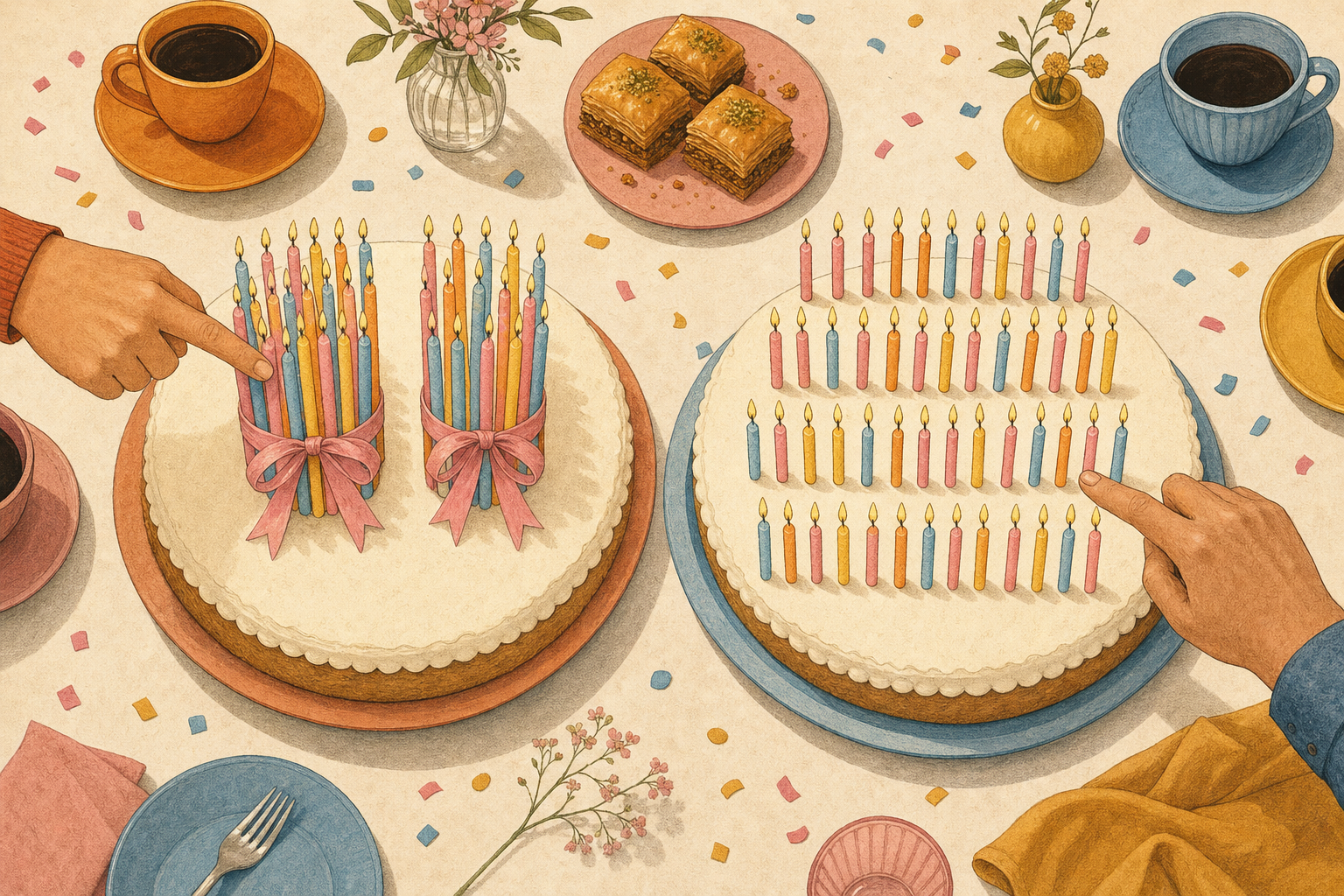
Picture a fortieth birthday. The cake arrives, and one cousin raises a glass: “Dyzet vjeç! Për shumë vjet!” Another, who grew up in Prishtina, calls out “Katërdhjetë!” Same candles, two different words. Which one is right?
Both, as it turns out. But to see why, start with the tens that behave.
The pattern most tens follow
Most Albanian tens are simply a number plus dhjetë (ten):
- tridhjetë: 30, “three tens”
- pesëdhjetë: 50
- gjashtëdhjetë: 60
- tetëdhjetë: 80
By that logic, 40 should be katërdhjetë. In standard Albanian, it isn't.
The two that count in twenties
- njëzet (20) = një + zet, “one twenty”
- dyzet (40) = dy + zet, “two twenties”
Zet is an old word for twenty that is no longer used on its own. It survives only inside these two numbers, a trace of counting in twenties, a bit like the English “fourscore” in old texts.
So, dyzet or katërdhjetë?
The standard language uses dyzet, and that's the form you'll meet in most textbooks and writing. The regular katërdhjetë (in Gheg also katërdhetë) is heard in many northern areas and in Kosovo. Everyone understands both. As a learner, say dyzet and simply recognise katërdhjetë when you hear it.
Three worked examples
- 22: njëzet e dy. Tens and units are joined with e, “and”.
- 44: dyzet e katër. Same pattern, with the twenty-based ten.
- 60: gjashtëdhjetë. Not “three twenties”: the zet pattern stops at 40 in standard Albanian. Some Arbëresh communities in Italy and Arvanites in Greece may still use trezet for 60.
Try it
Say these aloud: 25, 41, 56.
Answers: njëzet e pesë; dyzet e një; pesëdhjetë e gjashtë. If 41 came out as katërdhjetë e një, you'd still be understood, just with a northern accent to your arithmetic.
Takeaway: only 20 and 40 count in twenties. Everything else from 30 to 90 is “number + dhjetë”, glued to the units with e.
Keep learning
Explore more articles →