 THE ALBANIAN NOTEBOOK
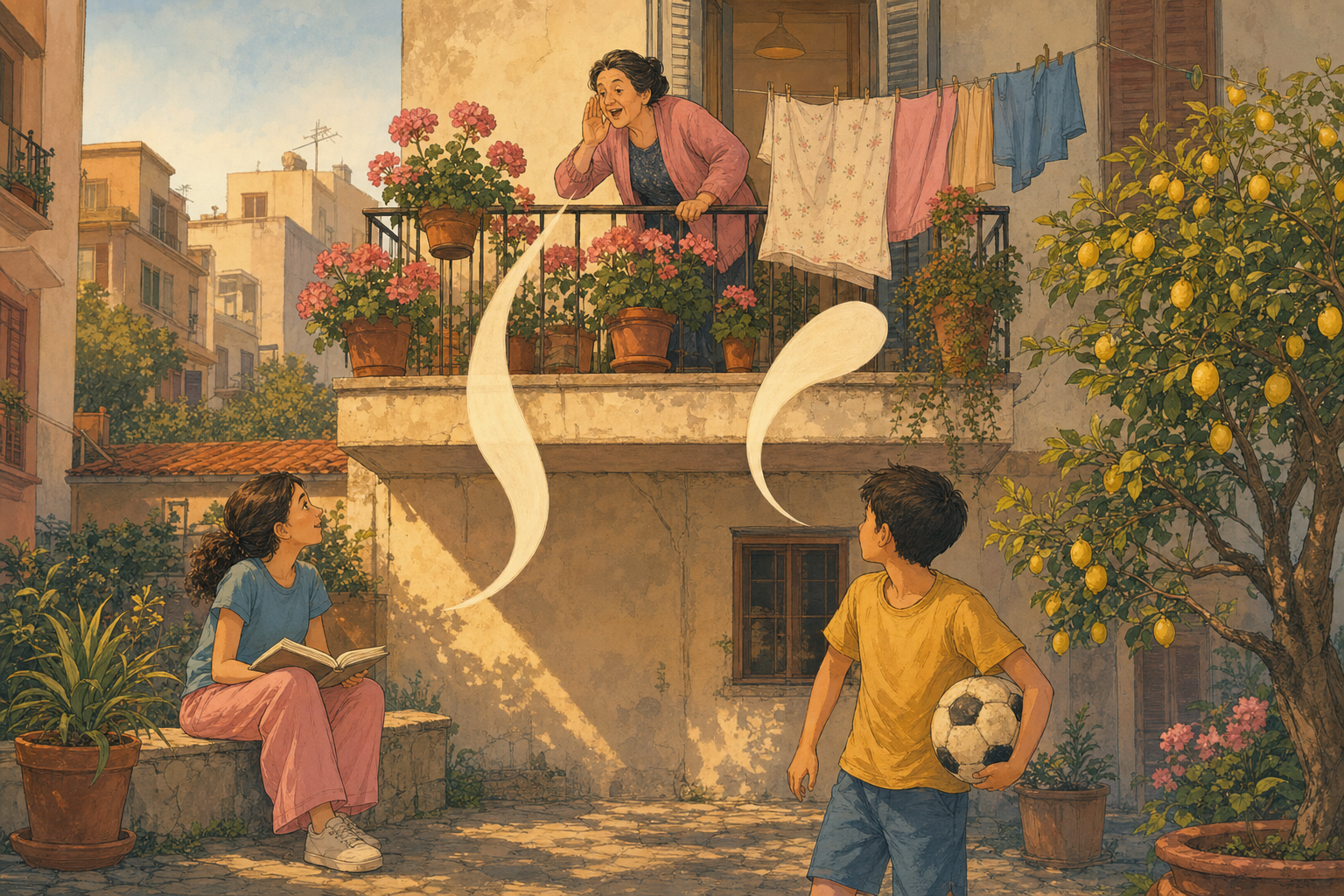
It's early evening in a courtyard. A grandmother leans over her balcony railing:
"Moj Ana! Eja, se u ftoh gjella!" (Ana! Come, the food's gone cold!)
No answer. Louder this time:
"More Dritan! Ku je, more?" (Dritan! Where are you?)
Even if you didn't know the names, you could tell which child was in trouble for being late. The clue is the little word in front.
Two small words, one job
Moj is used to call or address a woman or a girl. More, also heard as ore and mor, does the same for a man or a boy. Dictionaries file them as conversational interjections: words of the spoken language, where tone of voice does much of the work.
They can stand before or after the word they go with:
- Moj nënë! – Mum! (nënë = mother)
- Fol, moj! – Go on, say it! (fol = speak), said to a woman or girl
- Ku je, more? – Where are you? said to a man or boy
What they add
Next to a name or a family word, they bring a sense of closeness:
- Si je, moj gjyshe? – How are you, Grandma?
- Rrofsh, more vëlla! – Thanks, brother! (literally "may you live")
On their own, the same words can sound urgent or impatient, like the grandmother's second call. Ore can also carry surprise: Ore, sa i madh qenka! – Wow, it's so big! That qenka is the surprise form explained in our article on Albanian surprise forms.
You may also meet variants such as mori for women and bre, which dictionaries explain as meaning ore.
Try it
Fill in moj or more:
- ___ vëlla! (brother)
- ___ gjyshe! (grandmother)
- ___ djalë! (boy)
- ___ motër! (sister)
Answers: 1. More vëlla: a brother is male. 2. Moj gjyshe: a grandmother is female. 3. More djalë: a boy is male. 4. Moj motër: a sister is female.
Takeaway: when you hear Albanians call to each other, listen for the word next to the name. Moj points to a woman or girl, more or ore to a man or boy, and the tone tells you whether it's affection, impatience or surprise.
Keep learning
Explore more articles →